
How to Release Music Independently
How to Release Music Independently and Build Your Career
Putting out your own music means taking the reins. You’re in charge of everything, from turning raw studio takes into a professional, polished product to getting it into the hands (and ears) of listeners. It’s about transforming your art into something ready for the world, completely on your own terms.
From Studio Sessions to Streaming Ready
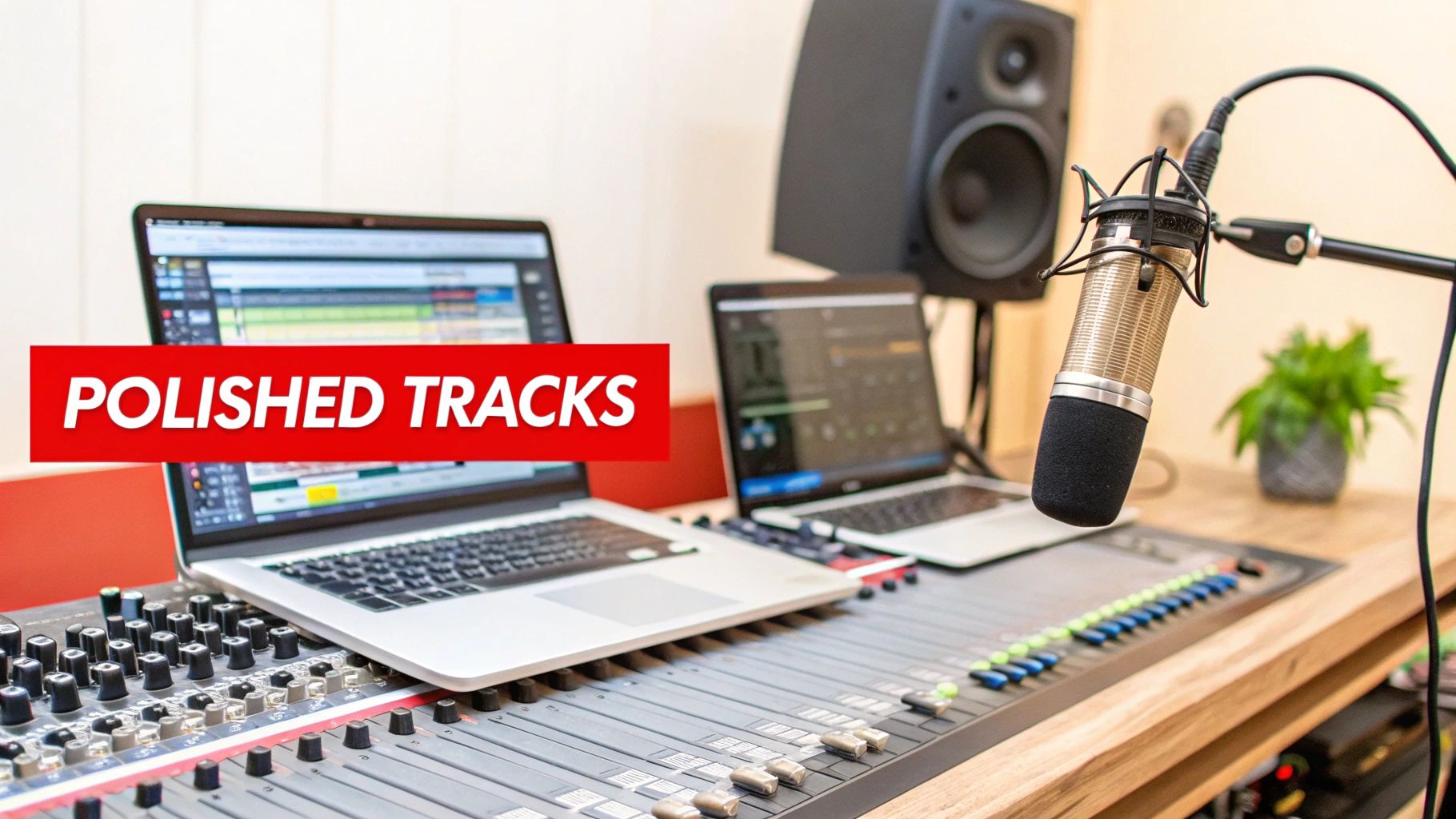
Before anyone streams your song, it goes through a crucial process. This is where your creative vision gets the technical polish it needs to shine. The real goal isn’t just to call a song “done”—it’s to make something that sounds just as good as a major label release on Spotify, Apple Music, or anywhere else.
It all starts with a clean, solid recording. Forget needing a million-dollar studio; this part is more about technique than expensive gear. Just focus on capturing the best performance you can, keeping background noise out, and making sure your audio levels are strong but not clipping. Every little thing you do here shapes the final sound.
From there, your raw tracks head to mixing. This is where the real magic happens. A good mix engineer takes all the separate pieces—vocals, drums, bass, synths—and expertly blends them into a single, cohesive track that hits with emotional impact. It’s a true art form that defines the song’s clarity, energy, and depth.
The Non-Negotiable Step: Mastering Your Music
Think of mastering as the final coat of varnish and the ultimate quality check before your music goes live. A mastering engineer takes your finished mix and makes those tiny, critical tweaks that make it sound incredible on any system.
Here’s what mastering really does for your track:
- Optimizes Loudness: It gets your song up to a competitive volume with other commercial releases without making it sound squashed or distorted.
- Balances Tone: Mastering smooths out any minor EQ issues, giving the track a professional and consistent sound.
- Widens the Stereo Image: It can enhance the stereo field, making your track feel wider and more immersive.
- Prepares for All Formats: Your final master is exported in the right formats (like WAV and MP3) with the correct specs for streaming services and physical duplication.
Honestly, skipping professional mastering is one of the biggest rookie mistakes you can make. It’s what separates a track that sounds pretty good in your headphones from one that sounds amazing everywhere—from a car stereo to a club PA system.
To help you stay on track, we’ve put together a simple checklist covering the essentials you need to nail down before you even think about uploading your music.
Your Independent Release Pre-Launch Checklist
| Task | Why It Matters | Recommended Timeline |
|---|---|---|
| Finalize Recordings | Lock in the best takes. Re-recording after mixing is expensive and time-consuming. | 12+ Weeks Before Release |
| Complete Mixing | Blend all instrument and vocal tracks into a cohesive, balanced stereo file. | 8-10 Weeks Before Release |
| Professional Mastering | The final polish that ensures your music sounds great and competes on all platforms. | 6-8 Weeks Before Release |
| Gather All Metadata | Collect song titles, artist names, writers, and publishers. Inaccurate data means lost royalties. | 6 Weeks Before Release |
| Create Your Artwork | Design a high-resolution (3000×3000 pixels) cover that grabs attention and meets platform specs. | 6 Weeks Before Release |
This checklist isn’t just a to-do list; it’s a roadmap to ensure every part of your release is handled professionally, setting you up for success from day one.
Why Quality Production Matters More Than Ever
The independent music scene is absolutely exploding. In the U.S. alone, the Independent Label Music Production sector has swelled into a $668.6 million industry. That massive growth signals a huge shift in how music gets made and heard. You can discover more insights about the independent music production industry to see the full picture.
More opportunity also means more noise to cut through.
Your production quality is your first impression. In a crowded market, a professionally mixed and mastered track signals to listeners, playlist curators, and industry professionals that you are a serious artist.
This isn’t about being picky; it’s about honoring the art you worked so hard to create. Investing in professional production isn’t just an expense—it’s an investment in your music’s future. It gives your work the best possible chance to get the attention it deserves.
Securing Your Royalties and Music Rights
Okay, your tracks are mixed, mastered, and sounding incredible. Now it’s time to switch hats from artist to business owner. This next part isn’t as glamorous as being in the studio, but it’s absolutely critical: securing your rights and sorting out your metadata.
Think of this as building the financial plumbing for your music career. Without it, you’re just creating art. With it, you’re building a sustainable business.
Every time your song gets played—whether it’s a stream on Spotify, a download from Apple Music, or background music in a coffee shop—a complex system kicks into gear to track that play and pay the right people. If your music isn’t registered properly, that money gets lost in the ether, and it will almost never find its way back to you.
Your Music’s Digital Fingerprints
To track your music in the global digital marketplace, every single song and release needs its own unique identifier. These codes are the digital fingerprints that let distributors, streaming services, and royalty collectors know who to pay.
There are two codes you absolutely have to get right:
- ISRC (International Standard Recording Code): This is a unique code assigned to one single recording. Got a 10-track album? You’ll need ten different ISRC codes. One for each song.
- UPC (Universal Product Code): This is the classic barcode for the entire product. Your 10-track album gets just one UPC. It’s the code that ties all those individual tracks together into a single package for sale.
Don’t stress about this part too much. Your distributor of choice—whether it’s DistroKid, TuneCore, or another service—will walk you through getting these codes. Most will even assign them for you, either for free or for a small fee. The important thing is just knowing what they are and why they matter.
Get Paid for Every Play with a PRO
Beyond just tracking sales and streams, you need a way to collect royalties from the composition itself—the melody and lyrics you wrote. This is where Performing Rights Organizations (PROs) are essential.
PROs collect and pay out royalties to songwriters and publishers whenever a song is performed publicly.
“Public performance” isn’t just a live concert. It includes radio spins, TV show placements, and yes, every single stream on Spotify and Apple Music. It’s even the music playing in the background at a restaurant or bar.
If you’re in the United States, your main options are ASCAP, BMI, and SESAC. As an indie artist, you need to affiliate with one of them as a songwriter. By registering your songs with a PRO, you’re telling the world, “Hey, I wrote this, and I want to get paid when it’s used.” It’s a step that countless artists miss, leaving a shocking amount of money on the table.
The New Power of Indie Publishing
Taking control of your own publishing rights is one of the most powerful moves an independent artist can make today. The numbers don’t lie. Between 2018 and 2023, independent music publishers saw their revenue explode from €1.15 billion to €2.57 billion—that’s a massive 105.6% jump.
This isn’t just a fluke. It shows that artists who manage their own intellectual property are building real, sustainable careers. You can dive deeper into the full research on independent music publishing to see the massive potential.
Managing your publishing is no longer just a defensive move to protect your work. It’s an offensive strategy that puts you in the driver’s seat, ready to capitalize on every opportunity your music creates.
Choosing Your Digital Distribution Partner
So, your music is finally done. Mixed, mastered, and ready for the world. Now comes the big question: how do you get it from your hard drive onto Spotify, Apple Music, and everywhere else people listen?
That’s where a digital distributor comes in. Think of them as the crucial link between you and the global music market. Picking the right one is a huge decision—it’s not just about getting your music online, it’s about how you get paid, how you track your listeners, and how you build your career.
This isn’t a choice to make lightly. You’re essentially choosing a business partner, so you want one that fits your goals, your release schedule, and your budget. Let’s dig into what you need to know.
Understanding the Different Fee Models
Before you even look at names, you need to understand the three main ways distributors charge for their services. Your release frequency will probably be the biggest factor here.
- Annual Subscription Fees: You pay one flat fee per year for unlimited uploads. Services like DistroKid pioneered this model, and it’s a no-brainer for artists who are constantly putting out new music. If you plan on dropping a single every month, this is almost certainly your most cost-effective route.
- Per-Release Fees: This is the traditional model. You pay a one-time fee for every single or album you upload. Platforms like TuneCore and CD Baby have used this approach for years. It’s perfect if you only release music once or twice a year and don’t want to be locked into a recurring subscription.
- Commission-Based Models: Some services are free to upload but take a percentage of your royalties. This can be tempting if you have zero budget upfront, but be careful. If your track blows up, that 15% cut suddenly becomes a lot of money. It’s a classic trade-off: save money now, potentially lose much more later.
Comparing the Top Distribution Services
While there are dozens of distributors out there, most independent artists end up choosing from a handful of major players. Each has a different philosophy and serves a slightly different type of artist.
DistroKid is all about speed and simplicity. Pay a small annual fee, upload as many songs as you want, and keep 100% of your royalties. It’s fast, easy, and incredibly popular for a reason. The catch? Many “extra” features, like getting your music into Shazam or administering YouTube Content ID, come with small, separate annual fees that can add up.
TuneCore also lets you keep 100% of your royalties and has built its reputation on robust features. They offer more in-depth analytics and have a fantastic publishing administration arm to help you collect every single penny you’re owed from around the world. It’s a great option for the serious, data-driven artist who wants more control and insight.
CD Baby is the old guard, and they operate a bit differently. You pay a single, one-time fee per release, and they keep a 9% commission on your digital earnings. The huge selling point? Your music stays in stores forever with no annual fees. They are also the undisputed champions of physical distribution, making them the go-to if you plan on selling CDs or vinyl alongside your digital release.
Your choice of distributor directly impacts your bottom line and workflow. If you release a song every month, an unlimited plan like DistroKid makes financial sense. If you’re releasing one carefully planned album a year, a per-release model from TuneCore or the lifetime distribution of CD Baby might be a better fit.
Let’s put the most popular options side-by-side to make the decision a little clearer.
Comparing Popular Digital Music Distributors
Choosing a distributor is a commitment, so it helps to see the key details laid out. Here’s a quick breakdown of the heavy hitters in the independent distribution space.
| Distributor | Pricing Model | Royalty Split | Best For |
|---|---|---|---|
| DistroKid | Annual subscription for unlimited uploads. | You keep 100% | Prolific artists releasing music frequently. |
| TuneCore | Per-release fee or annual subscription plans. | You keep 100% | Artists focused on detailed analytics and publishing administration. |
| CD Baby | One-time fee per release. | You keep 91% | Artists who want physical distribution and lifetime digital placement. |
| AWAL | Application-based, no upfront fees. | You keep 85% | Established artists with a track record looking for label-like services. |
| Amuse | Free tier available, with paid pro options. | You keep 100% | Artists on a tight budget who are willing to trade features for no cost. |
This table just scratches the surface, as each service offers a ton of smaller features and add-ons. The key is to match the distributor’s primary strengths with your own career goals.
The explosion of accessible distribution has fundamentally changed the music industry. It’s a fact that independent artists are no longer on the outside looking in—they are a dominant force. With over 50% of the music on major platforms now coming from unsigned creators, the playing field has been completely leveled. This revolution is powered by the very services we’re discussing. You can learn more about the state of the music industry and the incredible rise of the indie sector.
This fierce competition means you have more power and more choice than ever. Take your time, weigh your options, and pick the partner that feels right for you. Your distributor is one of the most important members of your team, even if you never meet them.
Building Buzz Before Your Release Date
So, your music is finished and your distribution is locked in. That’s a huge milestone. But hitting “upload” is the easy part. The real challenge? Getting people to actually listen.
Releasing a track without a solid promo plan is like throwing a massive party but forgetting to send the invites. The whole point is to build a wave of excitement that peaks on release day, not just cross your fingers and hope people discover it. This is where you, the independent artist, really start to shine.
It’s time to turn your core fans into a street team and give the streaming algorithms every reason to notice your new song the second it goes live.
Nail Your Pre-Save Campaign
In the weeks before your release, the pre-save campaign is your single most important weapon. Think of it as the digital version of a pre-order. When a fan pre-saves your song, they’re giving Spotify or Apple Music the green light to automatically add it to their library on release day.
But it’s so much more than a convenience for your listeners. Every single pre-save is a powerful signal to the platform’s algorithm.
It tells Spotify, “Hey, people are already waiting for this!” This drastically boosts your chances of landing on algorithmic playlists like Release Radar and Discover Weekly. A solid pre-save count can be the difference-maker that gets your music in front of thousands of new listeners.
Setting one up is pretty simple:
- Pick a Service: Tools like Feature.fm or Hypeddit specialize in creating these landing pages. Many distributors, including DistroKid and TuneCore, even build this feature right into their platforms.
- Create Your Landing Page: This is where fans will click to pre-save on their streaming service of choice. Keep it clean and simple.
- Promote It Relentlessly: For the 2-4 weeks leading up to release, this pre-save link should be everywhere. Put it in your social media bios, share it with your email list, and make it the focus of your posts and stories.
Start Pitching to Playlists
Getting your track on a big playlist can change everything, and it’s not as out-of-reach as you might think. You’ve got two main paths: pitching to official editorial playlists and reaching out to independent curators.
For the official Spotify playlists, you have to submit your track through your Spotify for Artists dashboard. Do this at least a week before release, but I’d strongly recommend 3-4 weeks in advance to give editors time. Be ridiculously detailed in the submission form. Tag the genres, moods, and instruments correctly. More importantly, use the notes section to tell the story behind the track and mention any promo you have planned.
Give the editors a reason to care. A generic pitch saying “check out my new song” will get deleted instantly. A compelling story that shows you’re hustling to support your own release makes them see you as a serious artist worth betting on.
While you’re waiting on the editors, start hitting up independent curators. These are the bloggers, influencers, and music junkies who have built loyal followings around specific sounds. A placement on a respected indie playlist can be just as impactful. You can find them on platforms like SubmitHub or by doing some good old-fashioned digging on Spotify to find a playlist’s creator.
Get Your Social Media Game Right
Don’t just post randomly. For the month before your release, map out a simple content calendar that’s all about building anticipation.
Here’s a simple weekly idea to get you started:
- Monday: Tease a tiny detail, like revealing a single lyric or a snippet of the artwork.
- Wednesday: Drop some behind-the-scenes content—a short clip from the studio or a video talking about what the song means to you.
- Friday: A strong, direct call-to-action to pre-save, maybe with a cool countdown graphic.
The key is to not just scream “Pre-save my new song!” every day. You have to give people a reason to care. Share the journey, talk about your inspiration, and pull them into the song’s world before they’ve even heard it.
Don’t Forget Your Email List
Social media is for casting a wide net, but your email list is for your true fans. These are the people who asked to hear from you. Treat them like VIPs.
Send them the pre-save link before you post it anywhere else. Give them exclusives, like a first look at the album art or a quick demo of the track. An engaged email list can give you that crucial first-day stream count that signals to the algorithms that your song is taking off.
Creating Physical Music and Merchandise
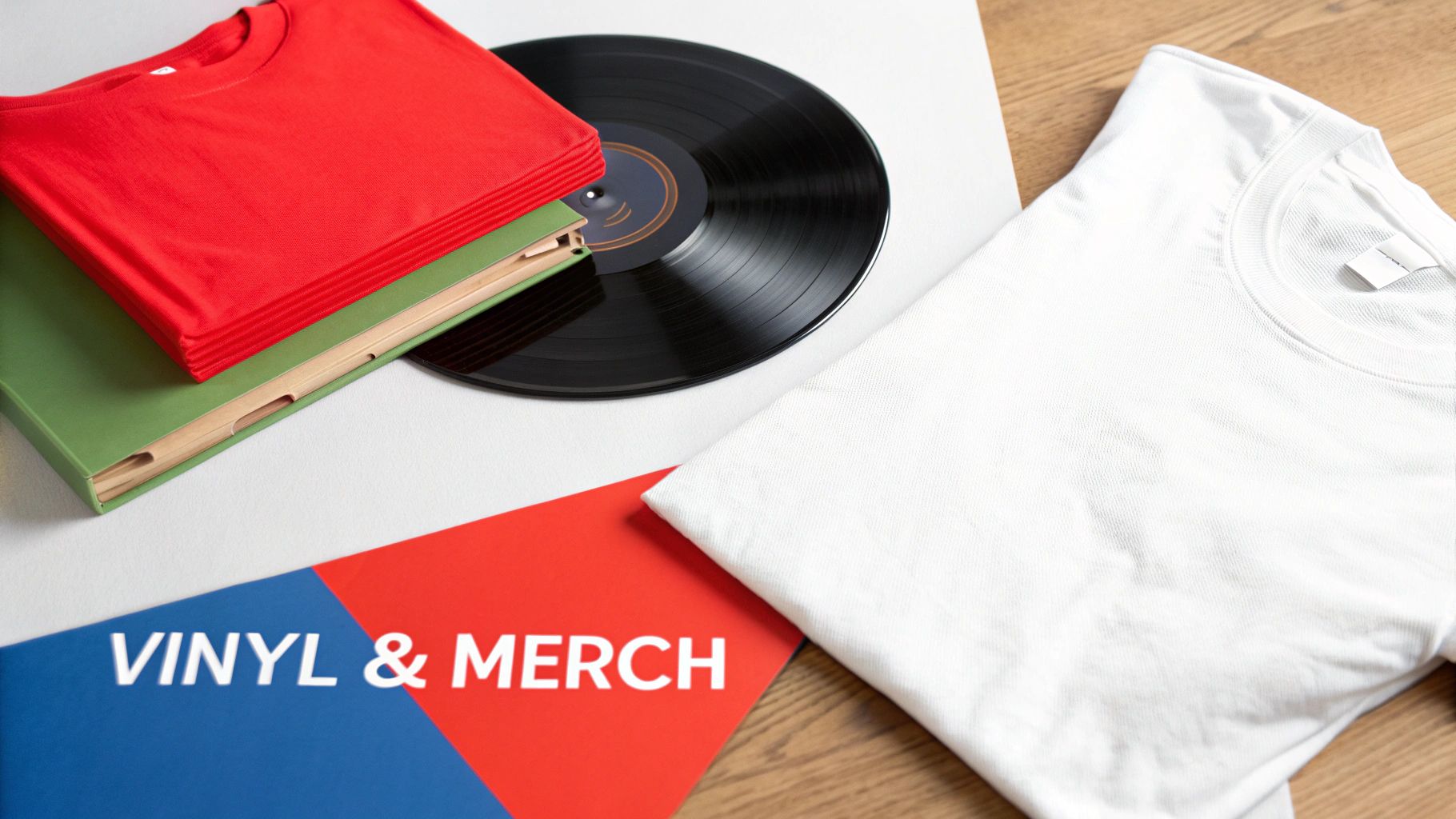
In a world filled with endless streams and ephemeral playlists, holding something real feels special. Don’t think of physical music and merch as retro novelties; they’re powerful tools for forging a real bond with your listeners and opening up a crucial revenue stream.
Selling a vinyl record or a custom tee is more than just a sale. It gives your most dedicated supporters a chance to own a piece of your art—a physical token of their connection to the music. Mastering this is a huge part of learning how to release music independently and build a career that actually lasts.
Manufacturing Your Physical Products
Bringing your music to life in physical form takes some serious planning, especially when it comes to costs and timelines. Vinyl has made a massive comeback, but it’s a slow and expensive game. You have to factor its long lead time into your entire release schedule.
- Vinyl Records: You’re looking at a minimum turnaround of 4-8 months, and honestly, it’s often longer. The costs are steep, and a minimum order of 100-250 units is pretty standard. Plus, you’ll need a separate master just for vinyl, which is another production cost to budget for.
- CDs and Cassettes: These formats are way faster and more affordable. Services like Mixtape Duplication can get custom CDs back to you in a few weeks, and the minimum order quantities are much lower. This makes them a perfect low-risk way to dip your toes into the world of physical products.
Finding the right manufacturer is all about doing your homework. Hunt for companies with upfront pricing, good reviews from other indie artists, and clear communication about their schedules.
Don’t go all-in on your first run. It’s so much better to sell out of a limited run of 100 records than to have 400 of them collecting dust in your basement for years. Start small, see what the demand is, and then you can build from there.
This simple bit of caution will save your budget and help you avoid that classic indie artist mistake of sinking all your cash into unsold inventory. As your fanbase gets bigger, you can scale up your orders to match.
Designing Album Art That Sells
Your album art is the visual handshake for your music. It’s the very first thing people see, and for a physical product, it’s a piece of art they’ll actually hold. The packaging is just as vital as the music inside.
Make absolutely sure your design files are print-ready and match the manufacturer’s exact specs. This means high-resolution images (at least 300 DPI) and the right color profile (almost always CMYK for printing). Trust me, hiring a professional designer who knows their way around print formats can save you from expensive mistakes and make sure your vision comes out perfectly.
Think about what else you can toss in to make the package feel special. Lyric booklets, custom inner sleeves, or cool color variants for the vinyl—these are the details that turn a simple product into a premium collector’s item your fans will be dying to get their hands on.
Handling Fulfillment and Shipping
Once your beautiful products are made, the last piece of the puzzle is getting them to your fans. You’ve basically got two ways to go about it, each with its own set of headaches and rewards.
DIY Fulfillment
- Pros: You get to keep 100% of the revenue. You have total control over how things are packaged and can add personal touches like handwritten thank-you notes.
- Cons: It’s a massive time-suck. You’re the one buying mailers, printing labels, and trekking to the post office every few days.
Third-Party Fulfillment
- Pros: Companies like Bandcamp or other dedicated merch services will store, pack, and ship everything for you. This frees you up to, you know, actually make music.
- Cons: It’s not free. You’ll pay storage fees and a cut of each sale, which eats into your profit margins.
When you’re just starting out, a hybrid approach is usually your best bet. Use a platform like Bandcamp, which lets you sell digital downloads while also giving you a simple system to manage shipping your own physical merch. As you start selling more, you can look into handing everything over to a full third-party service to deal with the volume.
Common Questions About Releasing Music Independently
Stepping out of the studio and into the world of distribution can feel like you’re learning a whole new language. It’s totally normal for a bunch of questions to pop up when you’re navigating this shift from creative to business mode. Here are some straight-up answers to the things that trip up artists the most.
How Far in Advance Should I Plan My Independent Music Release?
Timing is everything. Seriously. Rushing a release is the fastest way to blow all your best opportunities. Think of your release timeline like a runway—the bigger your project, the more runway you need to get it off the ground smoothly.
For a single, give yourself a bare minimum of 4-6 weeks. This isn’t just some random number. It gives your distributor plenty of time to get your track delivered to all the digital stores and streaming platforms. More importantly, it gives you the window you need to submit your song for official Spotify playlist consideration.
Now, if you’re dropping a bigger project like an EP or a full album, you need to think bigger. Stretch that timeline out to 3-6 months. This gives you the breathing room to plan and run a real marketing campaign, shoot music videos, pitch to blogs and press, and even get physical merch like vinyl or CDs made without tearing your hair out.
A well-planned release builds its own momentum. Rushing it just creates stress and guarantees you’ll miss out on connecting with listeners, curators, and the press. Your music deserves a proper launch, so give yourself the time to do it right.
Can I Still Get on the Radio or in Big Publications as an Indie Artist?
You absolutely can, but you have to play the game with the same level of professionalism as a major label. The gatekeepers are still out there, but the gates themselves are way more open than they used to be. The trick is understanding that you can’t just fire off a cold email with a streaming link and expect to land a feature.
Even if you don’t have a huge team, you can hire independent publicists and radio pluggers who are experts in your genre. These are the people who already have the relationships and can get your music in front of the right ears.
Going the full DIY route? Your success will come down to three things:
- A Killer Story: What makes you and your music different? Journalists and DJs are looking for an interesting angle they can talk about.
- A Pro Press Kit: This is non-negotiable. You need high-quality photos, a bio that tells your story, and dead-simple access to your music.
- Real Relationships: Start local. Connect with music bloggers in your city and the DJs at your local college radio station. Those relationships are the building blocks for bigger things later on.
What Are the Biggest Financial Mistakes Indie Artists Make?
Honestly, learning how to release music independently is mostly about managing your money smartly. Too many artists get tripped up by the same few financial mistakes that can kill their momentum before they even start.
The biggest one? Pouring every last cent into production and leaving zero budget for marketing. It’s a tragedy to have a perfectly mixed and mastered album that nobody ever hears. A good rule of thumb is to set aside at least as much for promotion as you spend on recording.
Another huge error is forgetting to register your songs with a PRO like ASCAP or BMI. This is literally leaving free money on the table. If you don’t register, you’ll miss out on performance royalties every time your song is streamed, played on the radio, or used in a public space.
Finally, artists constantly misjudge their physical merch orders. It’s so tempting to order 500 vinyl records to get that sweet per-unit discount, but it’s a massive financial gamble. Always start with smaller, limited runs to see what the demand is really like. It’s much better than getting stuck with boxes of unsold records in your living room.
Ready to get your music into the physical world without taking a huge financial risk? At CDinsertprints.com, we specialize in high-quality, custom CD duplication for independent artists, perfect for small runs and special releases. www.cdinsertprints.com
About the Author: CDinser
